Tungipara & Kotalipara, Gopalganj: How 300-Year-Old Floating ‘Dhap’ Gardens Became a UN FAO Global Heritage System
📊 Case Study Technical & Economic Profile
1. Regional Context & Agricultural Challenge
In the low-lying beel basins of Tungipara, Kotalipara, and southern Gopalganj, agricultural land remains submerged under 4 to 8 feet of monsoon water for five to six months every year, making conventional soil farming impossible.
2. Technical Implementation & BARI Protocol Applied
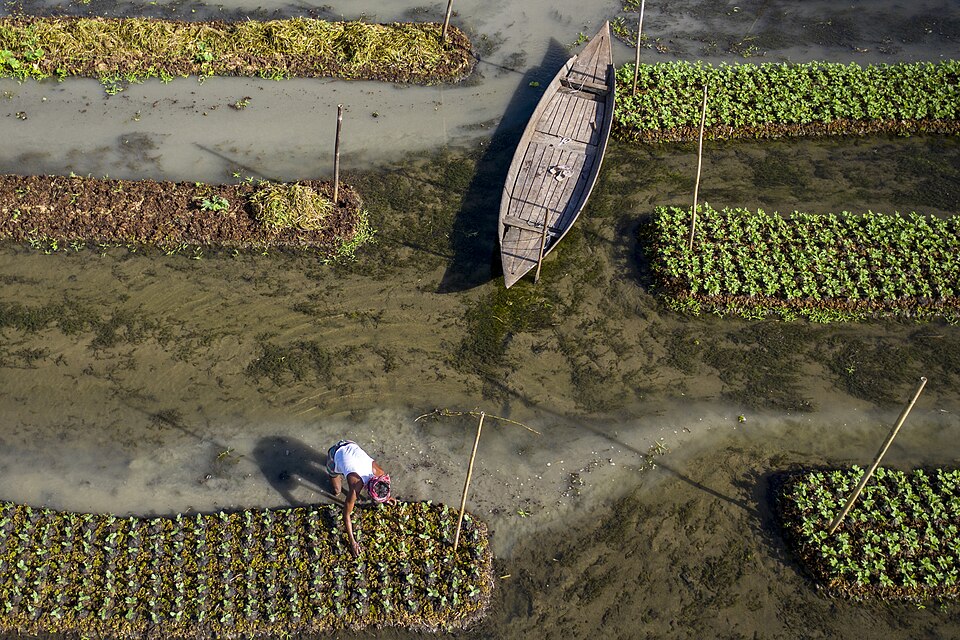
Generations of Bangladeshi farmers pioneered ‘Dhap’ (or Baira)—the world’s oldest community-scale organic hydroponics. Farmers weave buoyant rafts (up to 50 feet long) from invasive water hyacinth (Kachuripana), paddy straw, and aquatic weeds. Seeds are pre-germinated inside small round balls (‘Tema’) made of coir dust and aquatic peat before being transplanted onto the floating beds.
3. Harvest Results, Economic Impact & Grower Outcome
Recognized by the Food and Agriculture Organization (FAO) of the United Nations as a Globally Important Agricultural Heritage System (GIAHS), Gopalganj’s floating gardens empower over 25,000 wetland families to harvest three to four cycles of chemical-free vegetables during peak floods, before breaking down the decomposed beds as rich organic compost for winter crops.
This verified case study from Tungipara & Kotalipara, Gopalganj demonstrates how adapting BARI Stock Solution A & B and localized soilless structures solves real regional climate and soil constraints while delivering strong commercial returns in Bangladesh.