Banaripara (Barishal) & Nazirpur (Pirojpur): Commercial Floating ‘Tema’ Seedling Nurseries Supplying the Southern Delta
📊 Case Study Technical & Economic Profile
1. Regional Context & Agricultural Challenge
When monsoon floodwaters recede in late autumn across southern Bangladesh, millions of farmers urgently need mature, vigorous vegetable seedlings to plant early winter crops—yet terrestrial nurseries are still waterlogged.
2. Technical Implementation & BARI Protocol Applied
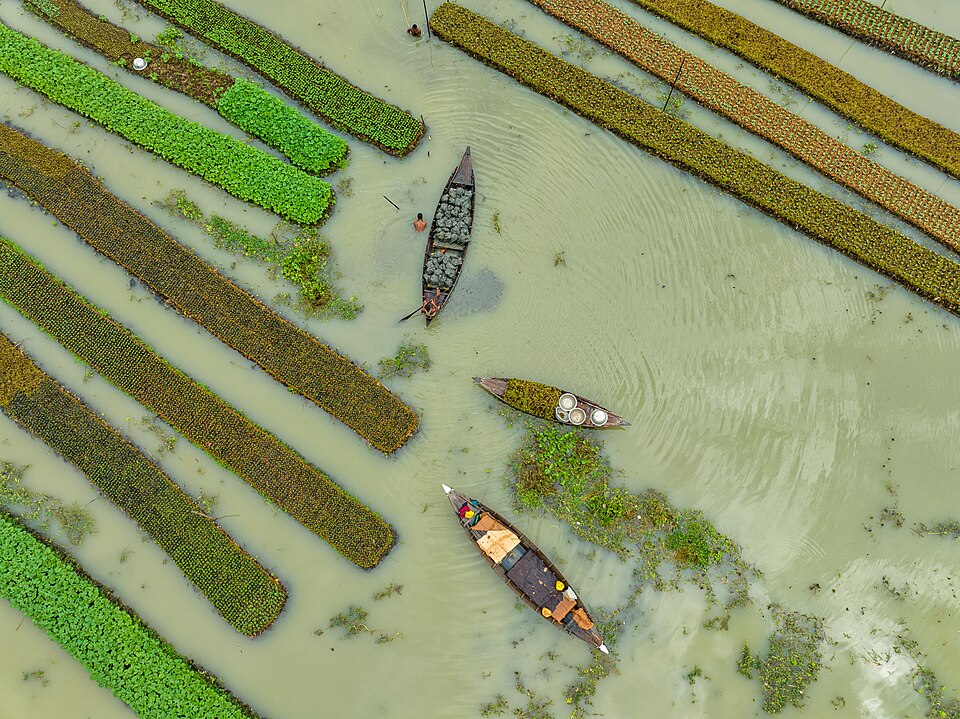
Growers in Banaripara (Barishal) and Nazirpur (Pirojpur) turned their flooded canals and beels into high-density floating hydroponic nurseries. Using coconut coir dust and aquatic compost wrapped into moisture-retaining ‘Tema’ balls, farmers raise tens of thousands of bottle gourd, sweet gourd, and chili seedlings on floating water-hyacinth rafts.
3. Harvest Results, Economic Impact & Grower Outcome
Each 40-foot floating bed produces up to 4 cycles of 3,000–5,000 seedlings per monsoon season. Boat markets in Banaripara and Nazirpur trade millions of Taka in floating-grown seedlings every week, giving southern farmers a 3-week head start on winter harvests.
This verified case study from Banaripara & Nazirpur, Barishal & Pirojpur demonstrates how adapting BARI Stock Solution A & B and localized soilless structures solves real regional climate and soil constraints while delivering strong commercial returns in Bangladesh.