BARI Olericulture Division Glasshouse (Gazipur): Standardizing Year-Round Off-Season Vegetable Production Without Soil
📊 Case Study Technical & Economic Profile
1. Regional Context & Agricultural Challenge
High-value winter crops like sweet pepper, tomato, and lettuce traditionally could not be grown during Bangladesh’s hot, humid monsoon months due to severe bacterial wilt, root-knot nematodes, and waterlogging.
2. Technical Implementation & BARI Protocol Applied
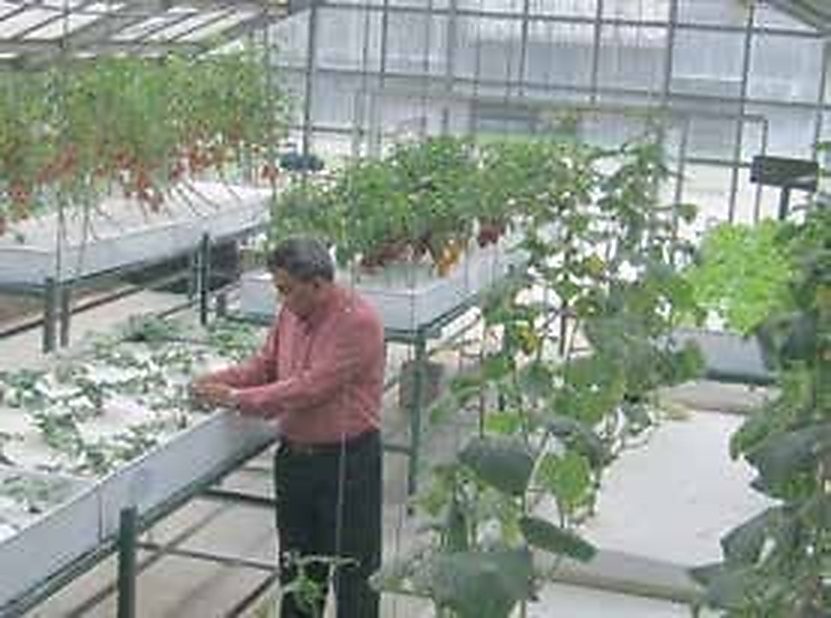
Inside the HRC protective glasshouses and UV polyhouses in Gazipur, BARI scientists engineered raised galvanized iron sheet trays (3m × 1m) lined with polythene and covered with perforated polystyrene sheets (‘cocksheet’), connected to a 500–1,000L subterranean tank with daily timed circulation.
3. Harvest Results, Economic Impact & Grower Outcome
The glasshouse trials proved that farmers can harvest high-value crops year-round in sterile media without a single drop of chemical soil pesticide, earning 200–300% higher off-season market prices.
This verified case study from Joydebpur (HRC Glasshouse Complex), Gazipur demonstrates how adapting BARI Stock Solution A & B and localized soilless structures solves real regional climate and soil constraints while delivering strong commercial returns in Bangladesh.