Rajoir, Madaripur & Chanda Beel: Climate-Resilient Floating Hydroponic Beds Producing Monsoon Turmeric, Spinach & Gourds
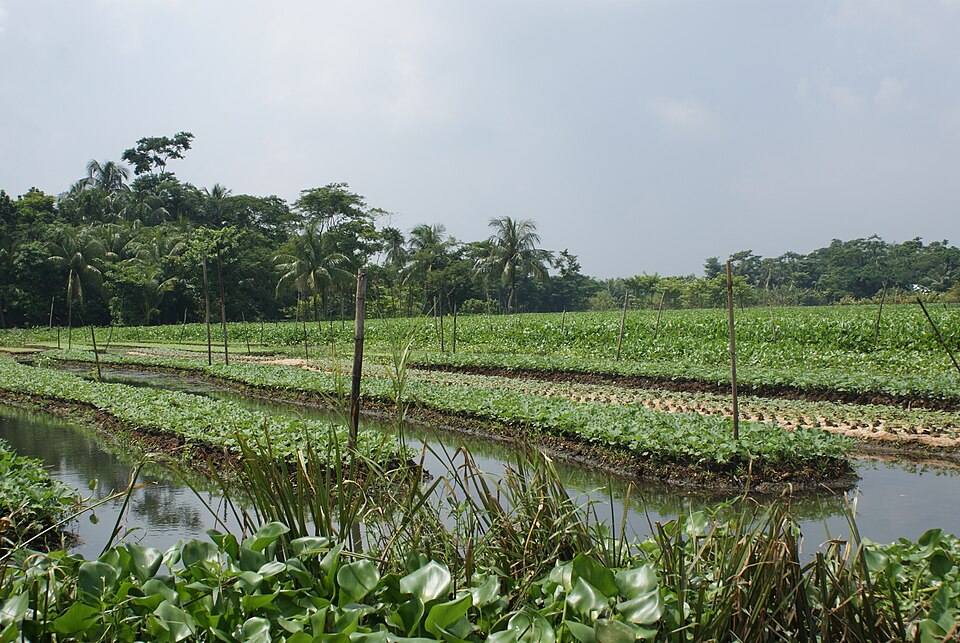
📊 Case Study Technical & Economic Profile
1. Regional Context & Agricultural Challenge
In the vast Chanda Beel wetland spanning Madaripur and Gopalganj, climate change and erratic monsoon rainfall caused prolonged waterlogging that destroyed traditional spice and vegetable crops.
2. Technical Implementation & BARI Protocol Applied
Supported by the Department of Agricultural Extension (DAE) and BARI climate-adaptation programs, local farmer groups combined traditional floating rafts with modern bamboo A-frame trellises and micronutrient foliar supplementation, allowing creepers and rhizome crops like turmeric to grow above the waterline.
3. Harvest Results, Economic Impact & Grower Outcome
Women and landless youth now cultivate flooded public canals and submerged plots without owning dry land, cutting chemical fertilizer costs by 85% and supplying fresh monsoon vegetables to local markets.
This verified case study from Rajoir & Chanda Beel Basin, Madaripur demonstrates how adapting BARI Stock Solution A & B and localized soilless structures solves real regional climate and soil constraints while delivering strong commercial returns in Bangladesh.